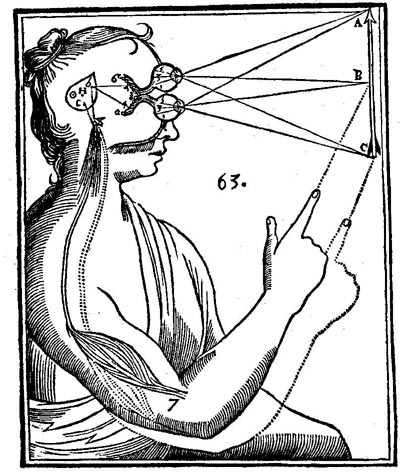
"And if he left off dreaming about you, where do you suppose you'd be? ... You'd be nowhere. Why, you're only a sort of thing in his dream! If that there King was to wake you'd go out -- bang! -- just like a candle!"
"Hush! You'll be waking him, I'm afraid, if you make so much noise."
"Well it's no use your talking about waking him when you're only one of the things in his dream. You know very well you're not real."
 I want to go.
***
Dear Oblates, future Oblates and friends,
We wish to propose the idea of a pilgrimage to the Holy Land in late November or early December 2007 for 10 to 12 days. It is just an idea at this point but in order for it to become a reality we need to know if there is enough interest to pursue the idea. The cost would probably be somewhere between $2500-3000, depending on the number of people interested in going.
It would be a pilgrimage in the spirit of the Community, led by a priest (maybe Fr Joseph Mary?!) and possibly another Brother. This would include daily Mass, times of adoration, spiritual talks, etc.
Please let Fr Joseph Mary know if you are interested--by April 15, Divine Mercy Sunday, at frjosephmary@yahoo.com
May God bless each of you as we enter into Holy Week.
In Mary,
Fr Joseph Mary
***
Colorado Springs: in a luxury suite with a fireplace, dressing room, and view of the mountains from the patio. A surprise. I'm here on college business. Who'da thought they'd think a great room to sleep in is necessary?
***
&.
***
 1333: Simone Martini's panel for the altar of St. Ansanus in the cathedral of Siena: the Annunciation. From the mouth of the angel, "Ave gratia plena Dominus tecum," the inscription from the best-known prayer to the Virgin, "Ave Maria," lifted from Luke 1:28--"Hail, full of grace, the Lord is with thee"--and instituted by the time of the fourteenth century as part of the daily devotions prayed by both clergy and laity in the Little Office of the Blessed Virgin Mary, during the first hour, Matins, and which is commonly illustrated in Books of Hours by images of the Annunciation. Ann van Dijk suggests that such pervasively inscribed images are meant to compel a "mimetic devotional response": to prompt viewers to complete the prayer, to compel them to adopt the posture (both physically and imaginatively) of the angel who kneels with humility before the Virgin, and to remind them that the prayer originated in the mouth of the angel, from Gods lips to the Virgin's ears. ***The compulsion of sacred art: itself mimetic towards the elicitation of mimesis: and its prolificness: the repetition implicit in mimesis, which is a powerful pull towards the making of likeness, the desire to be like. When I would talk of sympathy--even of love--I would have to remember to talk of likeness and the question, whom would you most want to be like? And why is it so, this almost insuperable need to emulate? Why does it so closely resemble completion? So much so that difference seems a break with unity?***
Best Western morning: distraction, a moment of neglect, and the water from the tub overflowed past the bathroom tiles into the room and soaked several feet of new carpeting. I wrung out towels and entertained lies for an hour before calling the desk to let them know and to ask about damages and billing. No one arrived at the door with help or a clipboard. I felt lousy and stupid and wondered how to best get out of it until my hands were raw with wringing and my back and forearms ached. Then my nervous head gave up working it out, and all of us walked down to the desk where the manager nodded when he saw me and said "maintenance's up there in your room now." Maintenance crossed my path on the stairs as I walked back to the room. He said, "how's your day? okay so far?" I shook my head and said "no, not so far, anyway, but it's my own fault." He said, "oh, you're 122, huh, we'll let's have a look. No need to keep you worrying." He stomped his boots on the rug. Water puddled around his heels. "No," he said, "really, I don't think this is a problem for you to worry about. I'll let them know it's no big deal." I thanked him and tried not to want to hug him (well, he was very attractive too). He smiled and stomped his boots, "yeah, it's no big deal, you're all set. --Oh, and thanks for being honest." I felt myself blink. "Yes, of course," I said. "Of course."
***
Bob Hellenga once mentioned that this depiction of the Annunciation delights him most of all. The Virgin keeps her thumb in her book (holding her place in her reading against this irritating disruption), clasps her garments to her neck, turns her shoulders away from the messenger, and casts him a look of disdain. "She reminds me of my wife at her lessons," he jokes. "She looks at me that way sometimes when I interrupt her work. Go away--I'm busy here!"
***
&.
***
 Boarding!***
&.
***
 Why so quiet? I've been elsewhere: at the priory, with Herman, at school, with books, and today off to Colorado Springs for the ACM Committee on Minority Concerns spring meeting for which I'm a faculty representative from Knox. I miss being here, though. When the week settles into routine after Easter, I'll make a point of keeping record of present days again. Just now, my past is with me, a separate notebook where I keep recalling what must be confessed. This is no place for confessions.
***
Why confess? So much I've secreted away as if it is my responsibility to keep such things in a safe hold, far from others. And now? The public confession, no. I can't tackle that in the few minutes I have to think this morning before turning to Donne and Shelley in the classroom. And you would expect me to address confessionalism as we know it, its Romantic pejorative and its lingering Beat reek, its perversions, its poor poetry, and I can't. I'm not ready to talk to you about it. The private confession, though. That my role is to hand my secrets over to one whose role is to keep my secrets. Whose role--out of love--is to listen, bear with me, turn my mind towards light. It reminds me I feel vulnerable because I am dependent, among others, on others. The secret implies that you matter to me. The confession implies that I tell you so.
***
&.
***
 Suddenly. Spring. With rain and the smell of morning. The entryway and basement smells. ***&.***

&.***
 Student evaluation: "She's a typical lit person..." --what does this mean, exactly? And why did the course fail to drive home that people aren't types?
***
&.
***
 Lyle pointed out once there are few people in my pictures, at least in ones I post here, but it's the chance portrait I love best, facial expressions, gestures of hands and heads, textures of clothing, skin, hair, and the incidental light--the variables you can't control with a snapshot. Either it takes great love or great aesthetic distance to photograph people, maybe both at once, I feel that somehow, am confused by what feels wrong in it, but to show the photographs is unequivocally to stare. To look for their presence without their knowledge of my looking. Our looking. Because now I am showing you what I mean: see them? I don't know who they are. Only that as they walked into the banquet hall together, he was blinded by the sun in the window. Only that he gazes in my direction because I stand in his path. He cannot see me in the darkness ahead of him, but he knows, they both know, the camera is taking their picture. I am speaking to them, holding them up, thanking them. They are poised and triangulated. This is their composure together. For now, they tolerate being seen.***&.***
 week one, first day of schoolLightning without a rumble, and general, as if it stormed all night and is now settling into pacified, involuntary, after-long-sobbing hiccups. It is very dark, darker than usual, and I'm unable to say why, I notice. Cloud cover, haze in the few lights I see. My little potted tree blocks my view of the building clock, so I notice the tree needs turning. I notice I wake later since the time change and am not sleepy at night. That I must settle into bed with big dense books. That on the worst nights the incantatory rosary is calming and brings sleep eventually. But I am not anxious, not now. Though I have two new classes to teach this morning and a life's confession to prepare in the coming weeks. It is scheduled. Holy Thursday. For Karen: the portrait you watched my confessor avoid all night. He looked away from me at last, embarrassed, and hid the glass of wine between his hands.
***
&.
***
 &.***
&.***
 &.***
&.***
 &.***
&.***
 &.***
&.***
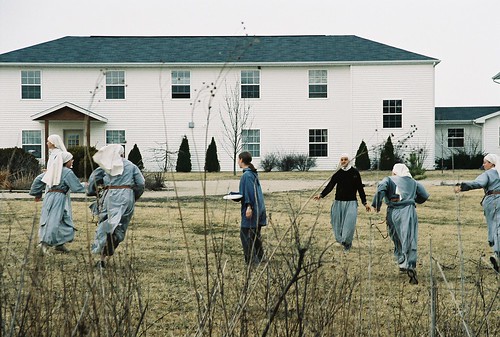 "Monks do sports? Barbara, monks do sports!"***What seems quiet around here has been nonstop busyness for me. Not the kind you can explain, either. The kind that seems to come flooding up suddenly because you forgot to do a bunch of stuff until now. Or you ignored it so it would take care of itself or go away, and it didn't, but it did get bigger, dire, or too scary to look at or touch without disposable gloves.
You do that too? Oh good.***
Romulus for instance needs a shave but no one will do it until mid-April I find out now that I get around to calling because the fur is making me reel--matted clods the size of whole cats, recall, on the furniture, rugs, in corners of the rooms (didn't I just clean that?)--is making me sneeze and dread spring a little when it starts to get much worse. But no one will do it because he bites unless he's etherized on a table. It takes three of us to bathe him, they said. So. We suffer together.
***
&.
***
 &.***
&.***
 &.***
&.***
 &.***
&.***
 5 by Lorna Dee Cervantes, Drive: the First Quartet
new poems, 1980-2005 (Wings Press, San Antonio, Texas, 2006)
***
More than other evaluative genres of writing--literary criticism, say, or certain forms of food journalism--the book review--with so much shrugging off of its real burden, its reason for being, its reason for speaking--too often yawns beneath its yoke and lies down in its imaginary jungle with its imaginary lion and goes to sleep on the job. But it is the same yoke under which most great travelogue speaks with enormous and laboring complexity, and even then with endless trepidation: the encounter with new x-scapes, the meeting up with Others.
I mean it's a crying shame that book reviewers would choose to be the ugly tourists of their field over choosing to become the Ambassadors. That you would act as if there is little or nothing at stake when you read--
As it turns out, Drive: The First Quartet consists of five separate books, thus raising the nagging question: did someone miscount? Furthermore, if this is the first quartet, and it is actually a quintet, does this mean there will be a second, or even a third, quartet (and will they actually be quintets as well)?
Here's a ewe who knows better: "did someone miscount?" You know better. That a quartet is a musical composition designed for four instruments, four voices, (or as in the literary precursor) four directions, four elements, four seasons, four landscapes, etc. That Eliot's Quartets--all four of them--each complicate their existential premise with their five lyric movements. That Drive's claim to "the first" makes a promise towards futurity, yes, but that it also playfully suggests a backward glance towards whence it came, towards where there is no first, not really, inasmuch a response to Eliot in this way either suggests that he has grandfathered the work as it is or that LDC's appropriation and re-formation of the quartet brings a firstness or newness to the projects worthy of the "news" of "new poems," at last, and in which Eliot, we recall, has after all seen for himself whether "the fire and the rose are one" (Little Gidding V.46). For Eliot is dead, and even if he still plays among the living, that doesn't make him first. He's the chicken or egg of this poetry. In his first quartet, "Time present and time past / Are both perhaps present in time future, / And time future contained in time past" (Burnt Norton I.1-3). He plays with your head. He wants you to think about time, memory, and history, and feel undone. Now, why would Cervantes--political historian, grand mother poet, Chicana--do any less given the stakes? (Some point out: "we were here first." Lot of good it did when the guys who arrived by boat said "yeah, but we were really really first.") So the important question to ask isn't "did someone miscount?" or "will there be a second...?" For those are grossly dismissive misreadings. But to ask: among the living and the dead, who's second? Who's last? Who's new? What does firstness mean--especially given its privilege? This is LDC's question. This was Eliot's question also, though he missed its particular urgency:
What we call the beginning is often the end
And to make an end is to make a beginning.
The end is where we start from. (Little Gidding V.1-3)
Ewe, little lamb, who made thee? Dost thou know who made thee? Were you counting sheep?
***
from Letters to David: an Elegiac Mass in the Form of a Train
for David A. Kennedy 1955-1984I remember the day Robert Kennedy was assassinated. I remember if better than when the President was shot. I felt it more. I was in the seventh grade, and that was the first year I was ever truly aware of politics or the wars of the world. That was the day the next door neighbor poisoned my pet cat to keep it off her lawn. I remember the sweet smell, like bitter almonds some say, but to me it smelled like she was vomiting rock candy. When I found her I could tell by the way she looked at me that it was too late to save her. I didn't even bother to call anyone. Just held her stiff, wretching body & I remember I didn't cry. I felt solid, smooth, like ice but dry, warm. I remember the sun that June morning. It burned the hairs on my arms & I remember how strange the heat felt, like needles of radiation entering in through the pores of my skin. It was numbing me. I held her on the ground. She was too convulsive to hold in my arms and I tried to tell her that. The ants around us were swarming as if excited by the smell of her cooling flesh. I stopped watching her die and smashed ants. Sick. They were so many frantic kamikazis. I wondered if it was a sin. So much minute life snuffed out could leave a blotch on my soul like murder.
...
That was the day I learned the word: apocalyptic. (Cervantes 190)
***
La Bloga's review of Drive.
William Allegrezza reviews Drive.
The Texas Observer talks with LCD.
Call for Papers: Critical Essays on Lorna Dee Cervantes.
***
&.
***
 Granted, picking poems for a national publication is nearly impossible, and The New Yorker’s poetry editor, Alice Quinn, probably does it as well as anyone could. (Quinn is also liked personally, and rightly so, by many poets.) But there are two ways in which The New Yorker’s poem selection indicates the tension between reinforcing the “literariness” of the magazine’s brand and actually saying something interesting about poetry. First, The New Yorker tends to run bad poems by excellent poets. This occurs in part because the magazine has to take Big Names, but many Big Names don’t work in ways that are palatable to The New Yorker’s vast audience (in addition, many well-known poets don’t write what’s known in the poetry world as “the New Yorker poem” — basically an epiphany-centered lyric heavy on words like “water” and “light”). As a result, you get fine writers trying on a style that doesn’t suit them. The Irish poet Michael Longley writes powerful, earthy yet cerebral lines, but you wouldn’t know it from his New Yorker poem “For My Grandson”: “Did you hear the wind in the fluffy chimney?” Yes, the fluffy chimney.***&.**
 The vet said Romulus is fat. I don't see it. He's furry. He sheds whole cats. ***
&.
***
Photographs of people from the Con Tinta gathering I want to show you, but first Walgreens gave me someone else's photographs instead of mine and then I fell behind with end of the term grading and other stuff, so the photos are languishing in a bin marked "F" behind the Walgreens counter I can't get back to. Poor Romulus is still at boarding school, too, has been since last Wednesday when I left for AWP. I've been booked with appointments and commitments since my return, all stretching into wee morning and late night hours way past the vet's open doors, so I won't be able to bring him home until this afternoon when he'll be hell pissed at me for leaving him with people who bathe him. Of course I miss him. What're you crazy? I know. I know I'm a bad mother. That's why I've only been entrusted with a big toothy cat. The universe knows better.***
&.
***
 &.***
&.***
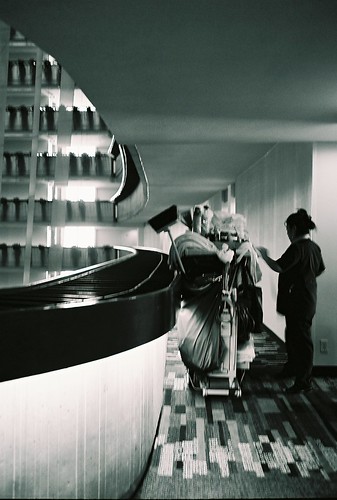
I
see evidence of a job I used to do, though clearly I've provided you with no evidence. ***"Let us imagine a tourist from Rome, on a conducted tour of the provinces, who takes snapshots of the swarming unruly mob at Golgotha, where two thieves and a rabble rouser are nailed to crosses. The air is choked with dust and the smoke of campfires. Flames glint on the helmets and spears of the soldiers. The effect is dramatic, one, that a photographer would hate to miss. The light is bad, the foreground is blurred, and too much is made of the tilted crosses, but time has been arrested, and an image recorded, that might have diverted the fiction of history. What we all want is a piece of the cross, if there was such a cross. However faded and disfigured, this moment of arrested time authenticates, for us, time's existence. Not the ruin of time, nor the crowded tombs of time, but the eternal present in time's every moment. From this continuous film of time the camera snips the living tissue. So that's how it was. Along with the distortions, the illusions, the lies, a specimen of the truth."
--Wright Morris, "In Our Image"***
&.
***

News of AWP with photos when the photos arrive and it's not the flurried last day of school. I'll pick up the photos from the shop tonight. For now, by God, let me be finished.***
Saw Paradise Lost recently and if you haven't you ought. Damien Echols' Amazon monster wishlist. What "freaks" read while on death row. Somebody send that guy some money. And send him some books of poems while you're at it. I mean, here's someone who actually has a use for poetry. Not most of us can say that.
"Although there was no physical evidence, murder weapon, motive, or connection to the victims, the prosecution pathetically resorted to presenting black hair and clothing, heavy metal t-shirts, and Stephen King novels as proof that the boys were sacrificed in a satanic cult ritual. Unfathomably, Echols was sentenced to death, Baldwin received life without parole, and Misskelley got life plus 40."***
&.
***
 Leaving Atlanta. In the dream my mother came for me just as my father moved into my room, dumped my things from my suitcase so he could use it, and put folks to work on a buffet lunch for his new young bride. When my mother arrived it was a surprise. She was the happiest I've ever seen her. She walked in, hugged me, said: are you ready? Okay then let's go! And led me down the hall away from my father's family. I looked for my bags, I apologized to my cousin for leaving her. She shrugged, looked uninterested. My mother said leave them don't worry. Let's you and I go. I've come for you.***&.***
 &.***
&.***
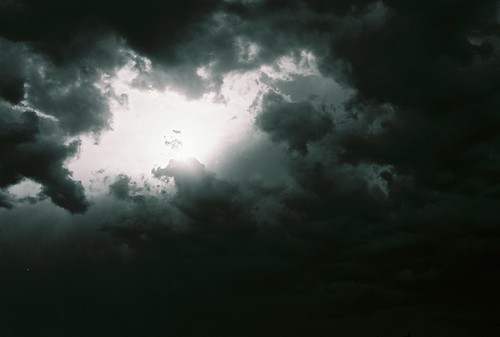 One thing I bought (riveted-all-the-way) yesterday:"'A poet would show little thought to say poetry is opposed to since it is added to like science,' insisted Zukofsky. So do I, insist. Consequently I would contest those writers whose end is (reviling-all-the-way) to prevail."
--C.D. Wright, Cooling Time
***
&.
***
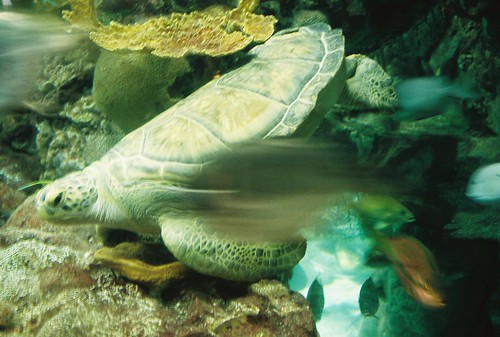 Two stills of a turtle: the driver said go to the aquarium, you're in Atlanta, you can see writers anytime. I've only just ventured across the street, but I slept with all of downtown rushing by my window. The city's haze is alight.
  ***& with its little wagging tale.***
"and what is the use of a book...without pictures or conversations?"
[contact me: ghostwordeffigy@yahoo.com]